The common misconception is simple: once a token leaves your wallet, the transaction is the main security risk. In many DeFi interactions, the more important decision happens before the swap, deposit, or liquidity action begins. You may be granting a smart contract permission to spend your tokens later. That permission can remain active after the transaction is complete, sometimes for far more than the amount you intended to use.
This matters even more in a multi-chain wallet. A user might hold the same asset on Ethereum, Arbitrum, Base, Polygon, or another network, yet each chain has its own contracts, balances, transaction history, and approval state. Cross-chain swaps add another layer: bridges, liquidity providers, routers, and destination-chain contracts may all play distinct roles. Convenience improves, but the number of assumptions a user must inspect also grows.
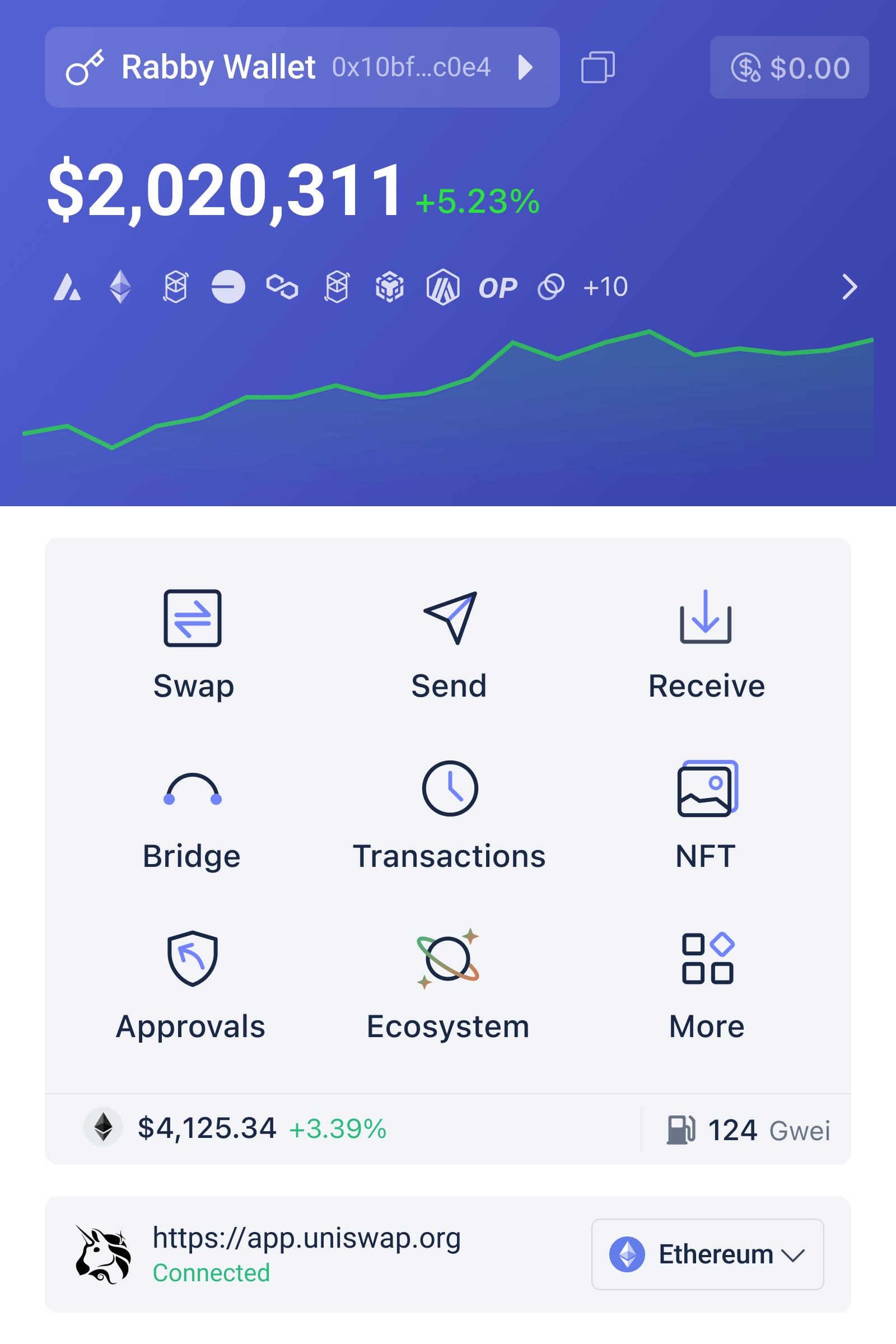
The approval is not the swap
An ERC-20 token approval is an allowance recorded by the token contract. It tells a designated spender—often a decentralized exchange router or another application contract—that it may move up to a specified amount of your tokens from your address. The later transfer may occur through a separate transaction initiated by the approved contract.
That distinction is easy to miss because wallets often present approval and swap steps as part of one user journey. Mechanically, however, they are different actions. The approval changes a permission; the swap uses that permission to move assets and execute a trade. If an approval is unlimited, the spender may be authorized to move any future balance of that token on that chain, subject to the token and contract’s rules.
This does not mean every unlimited approval is immediately dangerous. Established applications may use broad allowances to avoid asking users for a new approval each time. The trade-off is operational convenience versus a larger permission boundary. If the approved contract is later compromised, upgraded in an unsafe manner, or confused with a malicious address, the allowance can become relevant even though the original transaction looked routine.
Why multi-chain wallets change the mental model
A wallet is usually described as one account, but a multi-chain wallet is better understood as one key controlling many separate environments. Your address may look identical across networks, yet the blockchain state is not shared. An approval granted to a router on Ethereum does not automatically authorize that router to spend tokens on Arbitrum. Conversely, revoking an approval on one network does not revoke a similar approval elsewhere.
This creates a practical source of false reassurance. A user may check an approval dashboard on one chain, see nothing suspicious, and assume the wallet is clean. The more accurate question is: which contracts can spend which assets on which networks? Approval management is therefore not a single wallet-wide switch. It is a chain-by-chain inventory of permissions.
The same principle applies to token identity. A familiar ticker such as USDC or WETH is not, by itself, enough to establish that two assets are interchangeable. Contracts, networks, wrapped representations, and bridges matter. A token with the expected symbol on the wrong network can be economically or operationally different from the asset the user intended to hold.
Cross-chain swaps are a sequence, not a single event
“Cross-chain swap” sounds like one transaction, but the underlying process can contain several stages. Depending on the design, a user may approve a source-chain token, deposit or swap it through a source-chain contract, rely on a bridge or cross-chain messaging system, and receive an asset on the destination chain. Some services use liquidity already available on the destination chain; others involve minting, locking, or releasing a representation of the asset.
Each stage has its own failure modes. The source transaction may succeed while the destination delivery is delayed. A quote may change because of price movement or available liquidity. Fees can arise on more than one network. A destination asset may not be the native version a user expected. None of these outcomes necessarily means the wallet or protocol is fraudulent, but they demonstrate why “the swap succeeded” is an incomplete security and accounting statement.
The important conceptual distinction is between execution risk and permission risk. Execution risk concerns what happens during the transaction: slippage, failed calls, unexpected fees, or a wrong destination. Permission risk concerns what the contract may do afterward. A successful cross-chain swap can still leave behind an unnecessarily broad approval on the source chain.
How approval management evolved
Early DeFi users often treated approvals as a minor setup cost. Applications commonly requested large or unlimited allowances because repeated approvals added friction and required more gas. As DeFi expanded across networks, the convenience logic became less comfortable. More protocols, aggregators, bridges, and experimental contracts meant more permissions accumulated over time.
The modern wallet experience increasingly exposes more transaction context before signing. That is a meaningful improvement, but it is not a substitute for judgment. A warning can identify that an approval is unlimited or that a contract is unfamiliar; it cannot eliminate uncertainty about governance, upgradeability, operational controls, or the user’s own intent. A clear interface reduces cognitive load. It does not turn an unverified contract into a verified one.
For US users, the practical setting is also shaped by fragmented activity across networks and applications. A wallet may be used for a stablecoin transfer, a decentralized exchange trade, a yield position, and a bridge interaction in the same week. The result is not just a portfolio of assets but a portfolio of permissions. That second portfolio is often less visible and deserves deliberate review.
A practical framework for safer approvals
Before signing, identify four things: the network, the token, the spender, and the amount or allowance. The spender is especially important. It may not be the website’s brand name; it is the contract address that receives permission. If the requested spender does not make sense for the operation, stop and investigate rather than assuming the interface is correct.
Next, distinguish a one-time action from a continuing relationship. A swap may be one-time, while a token approval can persist. For occasional use, a limited allowance closer to the intended transaction amount can reduce the blast radius of a compromised or misbehaving spender. The cost is inconvenience and potentially another approval transaction later. For frequent, trusted activity, a broader allowance may be a rational convenience choice, but it should be treated as an explicit risk decision rather than an invisible default.
After using a protocol, review permissions on every relevant chain. Remove allowances that are no longer needed, particularly for applications used only once or for contracts that have changed role. Revocation is itself an on-chain transaction, so it costs network fees and does not undo transfers that already occurred. It also does not repair a compromised private key. Approval cleanup is risk reduction, not a complete security program.
When installing a wallet extension, use the project’s legitimate distribution path and verify the browser’s extension details before importing or connecting an account. Readers who need the setup process can consult the rabby extension download guide, then treat the extension as an inspection tool rather than an automatic safety guarantee. Never enter a recovery phrase into a website claiming to be an approval manager, support page, or troubleshooting form.
What wallets can show—and what they cannot know
Wallet simulation and transaction decoding can make signing decisions more intelligible. They may reveal the tokens expected to move, the contract being called, or a potentially unusual approval. That is valuable because many users cannot reasonably read raw calldata. Still, simulations depend on the current state and the assumptions of the analysis system. They may not capture every future behavior of an upgradeable contract, every off-chain instruction, or every economic consequence of a complex cross-chain flow.
This is the boundary that promotional language often obscures. A wallet can improve visibility, but visibility is not the same as authorization quality. The user must still ask whether the application is necessary, whether the destination is correct, whether the amount is sensible, and whether the approval should remain after the task ends.
There is also a usability trade-off. If every action demands exhaustive contract research, ordinary users may ignore warnings or approve reflexively. If the interface hides complexity, users may sign faster without understanding the permission being granted. The best direction is not maximum warning volume. It is better prioritization: make the material difference between a limited approval and an unlimited one obvious, separate source-chain and destination-chain effects, and explain uncertainty without producing meaningless alarm.
What to watch next
The next phase of wallet design will likely be judged by how well it manages permissions across changing chains and applications, not simply by how many networks it supports. Conditional expectations are useful here: if cross-chain activity continues to become more routine, users will need interfaces that present a unified risk picture while preserving the fact that approvals remain chain-specific.
Useful signals include clearer spender identity, more intelligible allowance controls, better distinction between bridges and swaps, and workflows that encourage post-transaction cleanup. These features would not remove smart-contract or bridge risk. They could, however, help users focus on the permissions that persist after the familiar “success” screen disappears.
The sharper mental model is this: your wallet does not only hold assets. It also holds a changing set of permissions granted to other contracts. Cross-chain swaps make the asset movement more complex; multi-chain use makes the permission map more fragmented. Once those are treated as separate objects to inspect, approval management becomes less mysterious and much more actionable.
FAQ: Token approvals and cross-chain wallets
Does revoking an approval return lost tokens?
No. Revoking changes what a spender may do in the future. It cannot reverse a transfer that already happened, recover assets sent to the wrong address, or repair a stolen private key.
Does an approval on Ethereum affect the same token on another chain?
Generally, no. Approval records are maintained by contracts on a particular network. You should review permissions separately on Ethereum, Layer 2 networks, and other chains where you use the wallet.
Is an unlimited approval always unsafe?
Not always. It can reduce repeated transactions and fees with a trusted application, but it grants a broader continuing permission. A limited allowance may be preferable for unfamiliar, infrequent, or high-value activity.