A cheaper Ethereum transaction is not necessarily a better transaction. In fact, reducing gas while ignoring what a transaction will actually do can make a DeFi decision more dangerous, not more efficient. The counterintuitive point is that gas optimization and security belong to different layers of the problem: one concerns the resources required to execute code, while the other concerns whether the code execution produces the result the user intended.
For US-based DeFi users, this distinction matters whenever a swap, liquidity deposit, bridge transfer, lending action, or token approval is signed through a browser wallet. A transaction can be valid, affordable, and successfully mined while still sending assets to an unintended recipient or granting excessive spending authority. Transaction simulation helps expose that gap, but it is not a crystal ball. Its value depends on what is simulated, how current the underlying state is, and whether the user can interpret the result.
The first misconception: lower gas means lower risk
Gas is the accounting unit used to pay for computation and storage on an Ethereum-compatible network. A transaction’s total fee is generally shaped by two variables: the amount of computational work required, often represented by gas used, and the price paid per unit of gas. Users can sometimes reduce cost by choosing a less congested time, selecting an appropriate fee configuration, or using a more efficient contract route.
Those techniques may reduce expenditure, but they do not establish that the transaction is safe. A malicious token approval can consume an ordinary amount of gas. A phishing contract can execute cleanly. A decentralized exchange route can be technically successful while producing a poor result because of slippage, thin liquidity, or a changed market price. Network settlement answers the question, “Did the requested code execute?” It does not answer, “Was this the transaction the user meant to authorize?”
This is the key conceptual separation: gas optimization is an execution-efficiency problem, whereas transaction simulation is an intent-verification aid. Treating them as interchangeable encourages a dangerous shortcut. A user who sees a low fee may feel that the transaction is low stakes, even when the transaction includes an unlimited token allowance or transfers a valuable asset to an unfamiliar address.
What transaction simulation actually does
A transaction simulation runs the proposed call against a representation of the blockchain state without broadcasting it as a finalized transaction. In practical terms, it asks the contracts to behave as though the transaction were being executed, then reports expected effects such as token transfers, approvals, balance changes, reverts, and sometimes the contracts involved in the call path.
This is useful because DeFi transactions are often composable. A single click may invoke a router, a pool, a token contract, and an aggregation service. The wallet interface may display a short function name, while the actual execution produces several state changes. Simulation can translate some of that hidden complexity into an outcome-oriented view: which asset leaves the wallet, which asset arrives, whether a permission is created, and whether the call is likely to fail.
The mechanism is more informative than a simple contract-name label. A contract can be unfamiliar but legitimate, and a familiar interface can route activity through a compromised or deceptive destination. Outcome inspection therefore complements, rather than replaces, address and contract analysis. The strongest mental model is not “simulation certifies this transaction.” It is “simulation provides a pre-execution estimate of the transaction’s consequences under a particular state.”
Why simulation improves security without eliminating judgment
Simulation is especially valuable for catching mismatches between the visible action and the expected result. If a user believes they are swapping one stablecoin for another but the simulated result shows a different token, an unexpected transfer, or a suspicious approval, the discrepancy is a reason to stop. Likewise, an apparent transaction that should be a simple deposit but instead includes a large outbound transfer deserves investigation.
It can also expose failed transactions before users spend money on them. A revert may result from insufficient liquidity, an expired quote, an incorrect network, a paused protocol, or an unmet condition in the contract. Avoiding a doomed transaction saves more than the gas fee: repeated failed attempts can create confusion, and rushed retries can lead users to sign a different prompt without understanding why the first attempt failed.
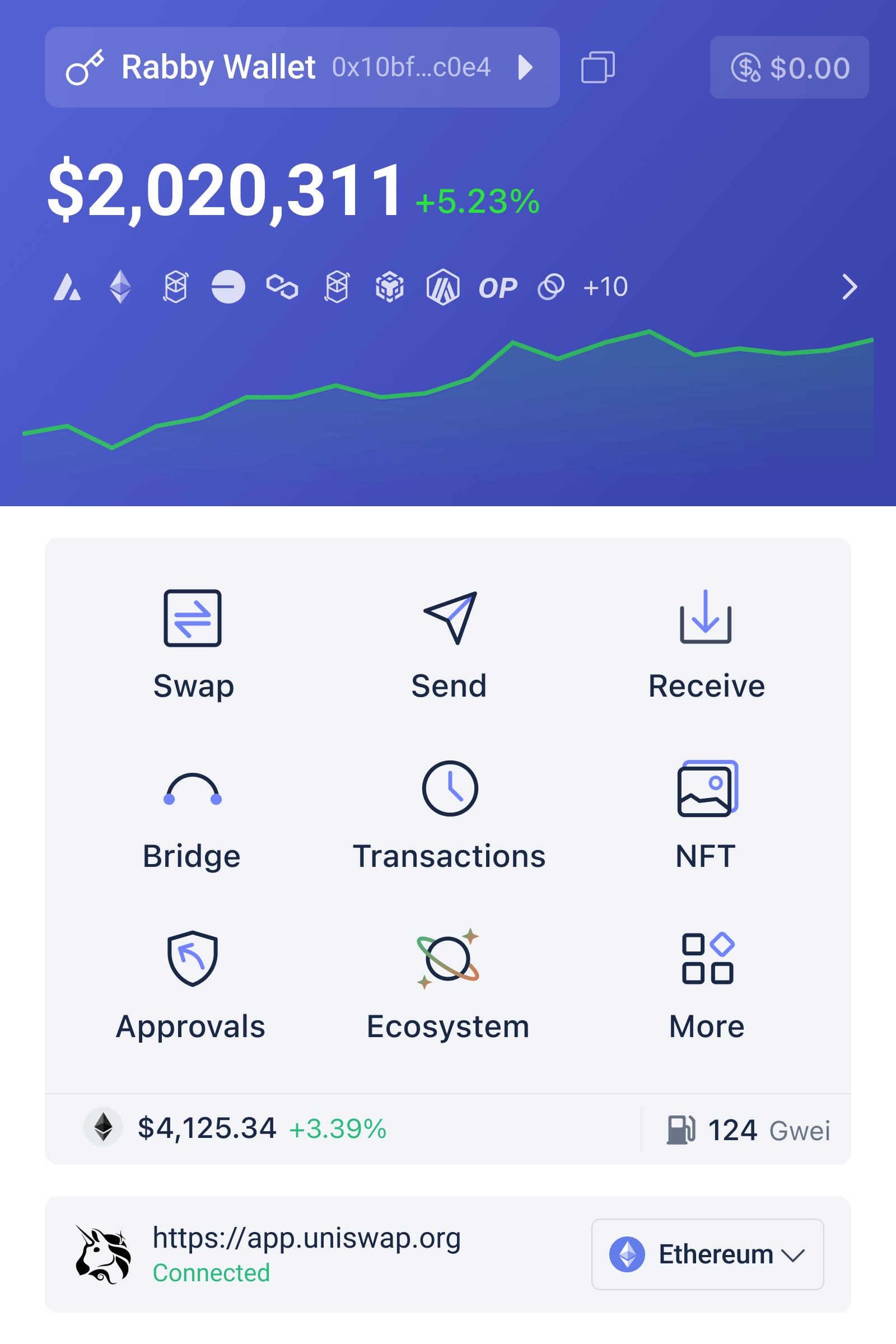
For someone preparing to install a wallet interface, the practical value of the rabby extension is not that a browser extension can remove all DeFi risk. Rather, a wallet can serve as a review boundary between an application’s request and the user’s signature. That boundary is meaningful only if the user pauses to examine the predicted effects instead of approving automatically.
Where gas optimization fits into the security model
Gas optimization remains important. On Ethereum mainnet, complex DeFi interactions can be expensive, and repeated actions may make otherwise reasonable strategies uneconomic. Efficient contract design, batch operations, route selection, and appropriate fee timing can reduce friction. Layer-2 networks can also lower transaction costs, although they introduce their own considerations involving bridge security, sequencer assumptions, token availability, and withdrawal procedures.
Yet each optimization has a boundary. A transaction that combines several actions into one call may reduce overhead, but it can also make the resulting state changes harder to inspect. A more elaborate swap route may improve the quoted output, while increasing the number of contracts and assumptions involved. A broad approval can avoid repeated approval transactions, but it creates a longer-lived permission that a vulnerable spender could abuse.
This is a general security trade-off: efficiency often compresses steps, while transparency often benefits from smaller, more separable actions. Neither side is automatically superior. The appropriate choice depends on the value at risk, the reversibility of the action, and the user’s ability to verify the result. For a small test transaction, a modest amount of extra gas may be a rational price for learning whether a route behaves as expected. For a large position, minimizing fee cost should not outrank validating recipient, asset, allowance, and network.
Why simulations can be wrong or incomplete
A simulation is a model of a moving system. Between simulation and inclusion, market prices can change, liquidity can move, and another transaction can alter a contract’s state. This is why slippage limits, deadlines, and sensible position sizing remain necessary. A favorable simulated swap is not a guarantee of a favorable execution several blocks later.
Simulation may also depend on the quality and recency of the state used by the wallet or supporting infrastructure. A simulation that does not accurately represent pending transactions, rapidly changing reserves, or a protocol’s unusual execution environment can produce an incomplete picture. Some contracts may behave differently depending on block parameters, transaction ordering, caller identity, or interactions that occur immediately before execution.
There is a further interpretive limitation. A simulation can show that an asset will be transferred, but it may not determine whether that asset is economically valuable, authentic, liquid, or redeemable. A token can have a convincing symbol and still be a worthless imitation. Likewise, a successful call to a known protocol does not prove that the front-end request was not altered or that the user is on the intended network. Simulation answers mainly about execution consequences; it does not independently establish economic legitimacy.
These limitations do not make simulation unhelpful. They define its proper role. It is strongest as a mismatch detector and weakest as a universal trust engine. Users should treat unexpected results as a stop signal, but expected results as only one layer of evidence.
A reusable pre-signing framework
Before approving a DeFi transaction, separate the review into four questions. First, identity: am I on the intended network, interacting with the intended application, and sending the request to the expected contract or recipient? Second, permission: is this a one-time transfer, a limited approval, or an effectively unlimited allowance? Third, outcome: which assets leave, which assets arrive, and what balances or positions change? Fourth, economics: what is the maximum fee, what slippage is tolerated, and what happens if the transaction fails or executes later?
This framework is more reliable than focusing on a single warning color or a single gas estimate. It also scales across common DeFi actions. For a swap, inspect input, minimum output, route, and deadline. For lending, inspect the asset supplied, the account receiving credit, collateral terms, and whether the action can trigger liquidation exposure. For bridging, verify the source and destination networks, recipient address, estimated arrival, and any separate claim step. For approvals, ask why the permission is needed and whether the allowance can be limited.
One useful operational habit is to distinguish low-value exploration from high-value commitment. New contracts, unfamiliar tokens, and complex routes should be tested with an amount that is meaningful enough to reveal behavior but small enough that an error is survivable. This does not guarantee safety, but it reduces the consequence of uncertainty. It also creates a clearer learning loop: compare the simulated result with the actual result, then reassess before increasing size.
What to watch as wallets and networks evolve
The next stage of wallet security is likely to depend less on displaying raw technical data and more on interpreting intent across multiple contract calls. Better interfaces could make permissions, asset provenance, route complexity, and changes in account state easier to compare. The conditional opportunity is substantial: if simulation becomes more accurate and explanations become more understandable, users may be able to detect dangerous deviations without reading contract bytecode.
That progress will still face a fundamental constraint. No interface can decide whether a speculative token, protocol strategy, or bridge is economically wise for every user. Security tooling can improve visibility and reduce accidental signing; it cannot remove governance risk, smart-contract bugs, market volatility, or the possibility that a user intentionally accepts a risky trade-off.
Frequently asked questions
Does transaction simulation guarantee that a DeFi transaction is safe?
No. Simulation estimates execution effects under a particular blockchain state. It can reveal unexpected transfers, approvals, or failures, but it cannot guarantee contract integrity, token value, future execution conditions, or the legitimacy of the application interface.
Should I optimize gas before reviewing a transaction?
No. First verify network, recipient, permissions, assets, and expected outcome. Once the transaction is understood, optimize gas within acceptable risk limits. Saving a small fee is not worthwhile if the optimization makes the call harder to inspect or encourages rushed approval.
Are token approvals more important than ordinary swaps?
They can be. An approval may grant a contract permission to spend tokens later, potentially beyond the immediate transaction. Users should check the spender and allowance amount, prefer limited permissions where practical, and periodically review or revoke permissions they no longer need.
The durable lesson is simple but easily neglected: successful settlement is not the same as successful intent. Gas optimization can make DeFi more affordable, and transaction simulation can make its consequences more visible. Effective security comes from using both in the right order—understand what will happen, decide whether that outcome is acceptable, and only then determine how efficiently to execute it.